
Bone Grafting for Dental Implants
Dental implants require adequate bone for support. After a tooth is lost, the surrounding jawbone can change in width and height over time. Depending on the location of the missing tooth, the amount of remaining bone, and the planned implant position, bone grafting may be recommended before or at the time of dental implant placement.
Our board-certified oral and maxillofacial surgeons evaluate the jawbone and surrounding anatomy when planning dental implant surgery. Three-dimensional imaging may be used when appropriate to determine whether adequate bone is available and whether grafting would be beneficial.
Bone Grafting at the Time of Tooth Extraction
After a tooth extraction, the extraction site heals and the surrounding bone naturally remodels. When future dental implant placement is planned, a bone graft may be placed in the extraction site to help preserve the dimensions of the ridge. This procedure is often referred to as socket preservation or ridge preservation.
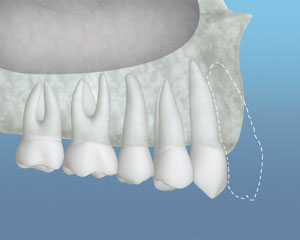
1. Inadequate Bone
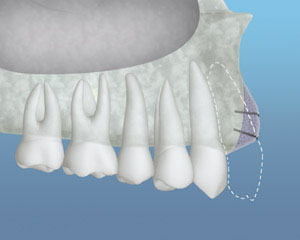
2. Graft Material Placed
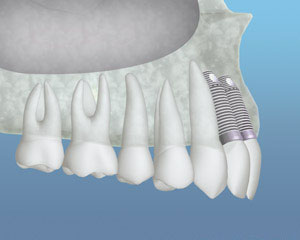
3. Implant Placed
Bone Grafting Before Dental Implant Placement
If a tooth has been missing for some time, the remaining ridge may not have sufficient width or height for the planned dental implant. In these situations, bone grafting can be used to rebuild the area. Depending on the individual situation, the graft may be performed before implant placement or in conjunction with implant surgery.
Different grafting techniques and materials are available, and the appropriate approach depends on the location and extent of the bone deficiency. Learn more about bone grafting procedures and materials.
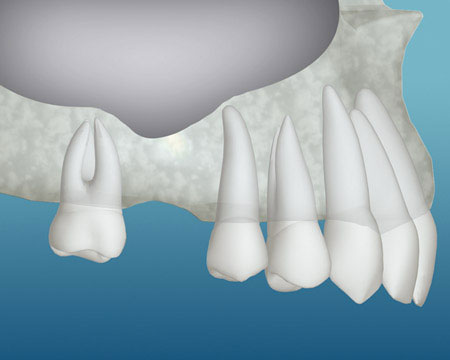
1. Inadequate Bone
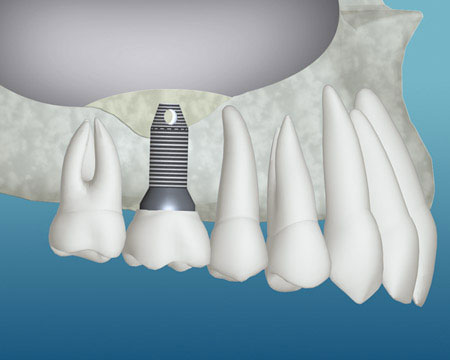
2. Bone Grafting for Implant Placement
Sinus Grafting for Dental Implants
In the back of the upper jaw, the maxillary sinus can limit the amount of bone available for dental implant placement. When additional bone height is needed, a sinus augmentation procedure may be considered. The sinus membrane is carefully elevated and bone graft material is placed to increase the available bone in the planned implant site.
Depending on the amount of existing bone and other clinical factors, the dental implant may sometimes be placed at the same procedure or after the graft has healed.
Learn more about sinus augmentation for dental implants.
Do I Need a Bone Graft for My Dental Implant?
Not every dental implant requires bone grafting. The need for grafting depends on the amount and quality of available bone, the location of the planned implant, surrounding anatomy, and the restorative treatment plan. Your surgeon can evaluate these factors and discuss whether grafting is recommended as part of your implant treatment.